


How to Pay Yourself Consistently in a Seasonal Craft Beverage Business in 5 Easy Steps (So You Can Give Yourself Year Round Financial Stability)
As a craft beverage business owner, whether you are running a distillery, winery, or brewery, one of the biggest challenges you face is the unpredictability of cash flow. When it’s peak season and sales are booming, it’s easy to feel like everything is on track. But when the quieter months hit, the lower level of business income can make it feel impossible to pay yourself a steady income.
The truth is, many business owners end up sacrificing their own pay to keep the business running in those quieter months. But it doesn’t have to be that way. With the right system in place, you can take control of your finances and pay yourself consistently, no matter how seasonal your sales may be.
In this article, I will show you how to apply the Profit First methodology to your seasonal craft beverage business in five easy steps, so you can give yourself year round financial stability while keeping your business sustainable and profitable.
Step 1: Define Your Financial Goals
The first step to paying yourself consistently is to get clear on your financial goals. This means understanding not only how much you want to pay yourself but also what income your business needs to generate to remain sustainable.
Start by asking yourself these key questions:
- What is the minimum amount you need to pay yourself each month to cover your personal expenses? Use the Lifestyle Cost Calculator to work out the cost of your current and hoped for lifestyle.
- What additional income would give you peace of mind or support your lifestyle goals?
- How much income does your business need to generate to support these goals, while covering profit goals, taxes, and all operating costs? Download the Business Size Calculator to help you work out what your business income needs to be to support your lifestyle.
Why this matters:
Setting clear financial goals gives you a reference point for managing cash flow effectively. Many business owners pay themselves, if they pay themselves at all, based on what they think the business can afford.
This approach often leaves owners unpaid or subsidising their business by underpaying themselves. Instead, start by identifying what you need to pay yourself. Then, focus on creating a business that can meet those needs. By prioritising your personal income as part of your business plan, you can build a sustainable business that works for you, not the other way around.
What to watch out for:
This step is about setting a target for your personal income. It doesn’t mean the business can afford it right away, but by understanding what you need to survive personally, you can start to gear your business to support you. The goal is to create consistent income for yourself while ensuring the business stays healthy and profitable. Striking this balance is key to building a sustainable system that works for both you and your business.
Step 2: Set Up Separate Bank Accounts
To pay yourself consistently throughout the year, you need a clear system for managing the cash in your business. Setting up separate bank accounts is a critical step to prioritise your personal income while ensuring that your business remains profitable. This structure ensures that money is allocated intentionally, so you can support yourself even during quieter months.
In the Profit First cash management system, you would set up a number of different bank accounts for specific purposes, such as profit, tax, and operating expenses. For more information on how these accounts work, visit this article on Profit First accounting. In this instance, we are focusing on the Owner Pay account.
The Owner Pay Account is where a portion of every sale will go, specifically reserved for your personal income. By separating this from other business accounts, you create a system that ensures you can pay yourself consistently throughout the year, regardless of fluctuations in revenue. This account prioritises your personal income and removes the risk of it being absorbed into day-to-day business expenses.
Why this matters:
By separating your Owner Pay from other accounts, you make paying yourself a priority, not an afterthought. This structure ensures that no matter how seasonal your cash flow may be, there is always money allocated specifically for your personal income.
What to watch out for:
Opening multiple accounts might feel unnecessary at first, but it is key to creating consistent income for yourself and keeping your business profitable. Start by opening an Owner Pay account and a Profit account. As your system becomes more established, you can explore adding other accounts to improve cash flow management.
Remember, the goal is to protect your Owner Pay funds and your business profitability. Avoid using these accounts for other expenses, even when cash flow is tight. This discipline is essential to making the Profit First system work for you.
Step 3: Allocate a Percentage to Your Owner Pay Account
Now that you have set up your Owner Pay account, the next step is determining the percentage of your revenue to allocate to it. In the Profit First methodology, this percentage remains consistent despite any seasonal impacts, but the actual cash amount allocated will vary depending on your income. This consistency helps ensure you are always prioritising your personal income while keeping your business sustainable and profitable.
To calculate your percentage, follow these steps:
- Determine your business annual income. Review your historical income (if available) or estimate it based on expected business annual income.
- Calculate your target annual pay. Use the amount you worked out in Step 1 as the annual income you need to cover your personal expenses and lifestyle goals.
- Divide your target annual pay by your business annual income. This will give you the percentage of your revenue that should be allocated to your Owner Pay account.
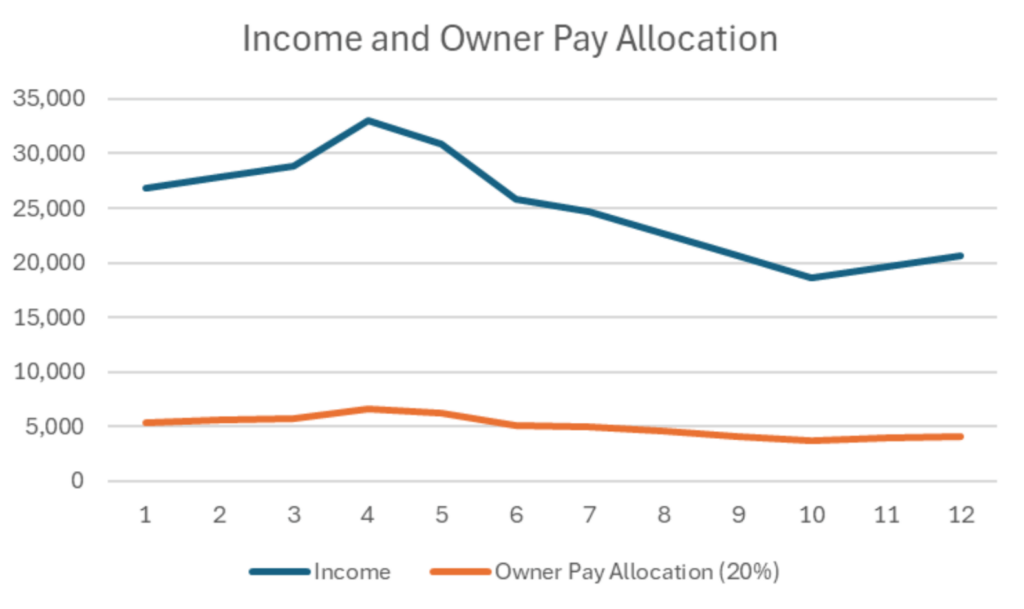
For example, if your business annual income is $300,000 and your target annual pay is $60,000, your allocation percentage would be 20%. Each time you deposit money into your income account, transfer 20% of it to your Owner Pay account.
Graph:
The graph below is an example of the seasonal income for a distillery in Australia, but we have adjusted it so that the total annual income is $300,000 to match the example mentioned above. It also shows the 20% allocation to Owner Pay (again as in the example above), highlighting the actual cash changes each month going into the Owner Pay account.
Why this matters:
Using a consistent percentage ensures that your personal income is always prioritised, regardless of your business’s seasonal income patterns. This approach gives you clarity and control over your personal finances, helping you maintain stability even when revenue fluctuates.
What to watch out for:
Avoid setting a percentage that is too high, especially if your business is in its early stages or has significant operating expenses. Start with a realistic percentage that aligns with your business’s financial capacity and adjust it over time as your business revenue changes and/or you gain greater control over your expenses.
Step 4: Use Peak Periods to Build an Owner Pay Buffer
One of the most powerful advantages of the Profit First system is that it allows you to create a buffer during your busiest periods to support your personal income in quieter months. By building this reserve in your Owner Pay account, you ensure that your pay remains consistent year round, regardless of seasonal income fluctuations.
During peak periods, when your revenue is higher, the consistent allocation percentage to your Owner Pay account will result in larger cash deposits. These extra funds should remain in the account to cover your pay when revenue dips in the off season. This approach provides financial stability for you while keeping the system simple and effective.
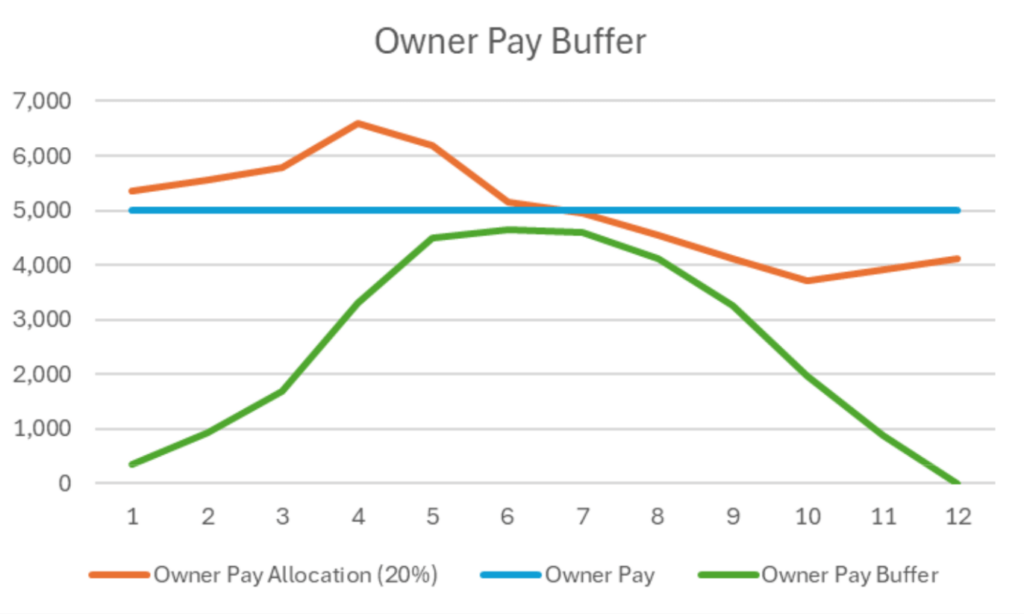
For example, if your business earns $60,000 in one peak month, your 20% allocation would result in $12,000 being deposited into your Owner Pay account. In contrast, during a quieter month where your income might only be $20,000, the same 20% allocation would provide $4,000. The buffer created during peak months ensures that you can draw a steady amount, such as $5,000 each month, even when revenue is lower.
Graph:
The graph below illustrates how the buffer works. It shows a consistent pay amount drawn from the Owner Pay account, even when revenue fluctuates. The graph highlights how larger allocations during peak periods create a reserve that supports consistent pay in the quieter months.
Why this matters:
Building an Owner Pay buffer ensures that your personal income remains steady and reliable, no matter how seasonal your business may be. This removes the stress of inconsistent pay and allows you to focus on running and growing your business with confidence.
What to watch out for:
Avoid the temptation to draw more from your Owner Pay account during peak periods. The reserve is there to support you in the quieter months, so discipline is key to making this system work. Monitor your Owner Pay balance regularly to ensure the buffer aligns with your expectations.
- If the buffer is lower than expected: Look at improving your business income so that the amounts being allocated to Owner Pay are sufficient to achieve your target pay. Alternatively, consider amending operating expenses to increase the percentage allocated to Owner Pay.
- If the buffer is higher than anticipated: You can consider increasing your pay or using the surplus funds to invest in other aspects of the business.
Step 5: Monitor and Adjust Regularly
Implementing Profit First is not a “set and forget” system. To ensure it continues to support your personal income and the profitability of your business, you need to review and adjust your allocations regularly. This is especially important for seasonal businesses, where income patterns can shift over time.
Schedule quarterly reviews to assess how well the system is working for you. Start by reviewing your Owner Pay account. Check if your buffer is sufficient to maintain consistent pay during quieter months. If it’s not, consider whether your allocation percentage needs adjusting or if other business changes are required.
Key areas to review include:
- Your allocation percentages: Are the percentages for Owner Pay, Profit, Tax, and Operating Expenses still appropriate for your business? If your business has grown or your income patterns have changed, you may need to revise them.
- Your actual income: Compare your actual income to your expectations. Are there areas where revenue can be improved?
- Your expenses: Look for opportunities to cut unnecessary costs, which can free up more cash for your Owner Pay allocation.
Why this matters:
Regular reviews ensure that the system continues to work for both you and your business. By keeping your allocations aligned with your goals, you can maintain consistency in your personal income while ensuring your business remains sustainable and profitable.
What to watch out for:
Be careful not to neglect these reviews. Without them, it’s easy for the system to fall out of alignment, which can lead to inconsistent pay or financial strain on your business. Use these reviews to make intentional adjustments, ensuring that your business is meeting both your personal and financial goals.
Final Thoughts
Paying yourself consistently in a seasonal craft beverage business can feel like a challenge, but with the Profit First methodology, it becomes achievable. By setting clear financial goals, creating the right bank account structure, allocating a consistent percentage to your Owner Pay account, and building a buffer during peak periods, you can stabilise your personal income while keeping your business profitable.
The key to success is discipline. Sticking to the system, and regularly reviewing your finances ensures that your pay remains steady and your business continues to thrive.
If you’re ready to take control of your cash flow and pay yourself with confidence, these steps provide a solid foundation. With the right approach and support, you can build financial stability for both you and your business, and enjoy the rewards of running your craft beverage business.